


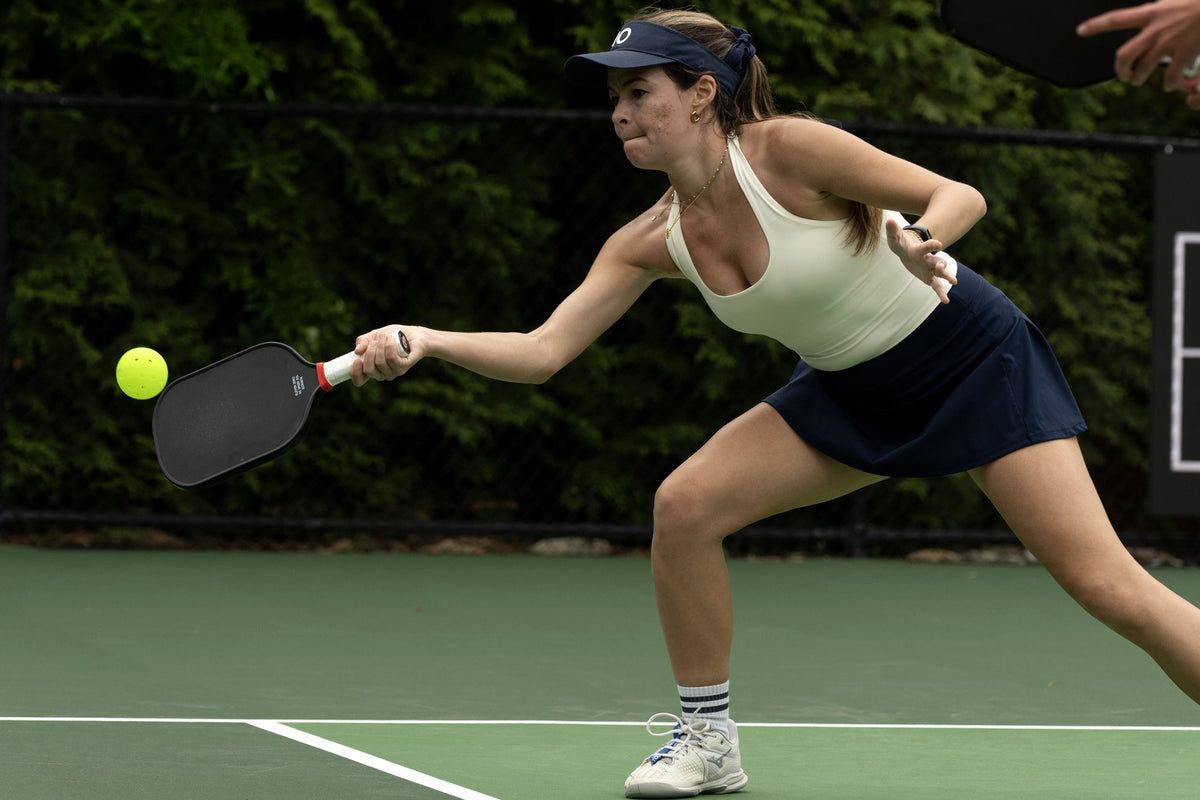
Quick answer: Most tennis players do best with an elongated paddle, a handle long enough for a two-handed backhand if they hit one, and a swing weight that still feels quick at the kitchen line. Resist the instinct to buy the most powerful paddle on the wall. Tennis converts already generate pace, and the points they lose early on are usually lost at the net on touch rather than on drives.
Tennis players arrive in pickleball with a head start most beginners would envy. They track the ball and move well, and most already hit a full swing with topspin on both sides. They also bring equipment instincts from a sport where the racquet is longer and heavier and the ball comes off strings, and several of those instincts point the wrong way on a pickleball court.
Sorting what carries over from what does not is the fastest way to the right paddle.
What carries over from tennis
The swing carries over best. A tennis forehand translates directly into the pickleball drive, and a player who can hit topspin will find it here too, with a shorter backswing. Footwork, the split step and reading an opponent's contact all transfer with little translation.
The two-handed backhand carries over as well, and it has a direct equipment consequence. A player who hits with two hands needs a handle with room for both, which on most paddles means 5.5 inches or longer. Our guide to handle length works through who actually needs it.
What does not carry over
The size of everything changes. A standard adult tennis racquet is 27 inches long, while USA Pickleball caps a paddle at 17 inches long with length plus width no more than 24 inches. The hitting surface sits much closer to your hand, so the timing on volleys is tighter and there is less frame to rescue a late contact.
The ball changes too. A pickleball is a light plastic ball with holes, so it slows down quickly after it leaves the paddle and rewards placement over pace. Kitchen rallies are won with soft shots that tennis players rarely practice, and this is where most converts give away points in their first months.
The biggest equipment change is the missing strings. In tennis, string type and tension decide much of how a racquet feels. In pickleball the face material and the core do that job, and two paddles that look identical can feel very different on contact.

The equipment instincts to unlearn
Heavier is not automatically better. A performance tennis racquet weighs around 11 ounces strung, and tennis players often reach for the heaviest paddle on the wall. A typical paddle weighs about 8 ounces, and what decides how heavy it feels in play is swing weight, which depends on where the mass sits. A paddle that feels stable on a drive can feel slow in a fast exchange at the net. Our explainer on static weight and swing weight covers the difference.
Power is the second instinct to question. Tennis players already generate pace, so a paddle built for maximum power adds speed to the shots they already hit well and makes the soft shots they still need to learn harder to control. A converted tennis player usually gains more from a paddle that resets easily than from one that hits harder.
Grip size is the last one. Tennis grips often run larger than paddle grips, and many converts pick a paddle grip that feels as thick as their racquet did. A grip that is too thick slows the wrist on quick volleys. Our grip size guide shows how to measure, and an overgrip adds thickness later if you need it.
Shape and thickness for a converted tennis player
Elongated is the de facto standard shape in competitive play, and most tennis players settle there because its proportions feel familiar on full swings. Standard and widebody shapes put more face to either side of the sweet spot, which helps on volleys hit off center. Our paddle shapes explainer covers the tradeoff.
Core thickness matters in a direction that depends on the core material. On our triple-density foam core, the 14mm plays softer, resets more easily and counters quicker, while the 16mm is plusher, more stable and more powerful. A tennis convert who wants help with the soft game usually starts on the 14mm, and a player who wants stability behind big drives often prefers the 16mm.
How to choose like someone who knows
- Match the handle to your backhand. Two-handed players need room for both hands, so start at 5.5 inches.
- Judge swing weight in a hands battle. Stand at the kitchen line and have a partner feed fast balls at your body for two minutes before you decide.
- Test the soft game first. Hit twenty dinks and twenty resets before a single drive, because the drive will feel good with almost any paddle.
- Size the grip for pickleball. If you are between two sizes, choose the smaller one and build it up with an overgrip.
- Check where you will play. If you plan to enter tournaments, confirm the paddle is approved for those events, since events accept USA Pickleball approval, UPA-A approval or both depending on who sanctions them.
Where we land
For a tennis convert, the choice in our line usually comes down to two paddles. The EZ Speed E14 is the one we suggest for players still building their soft game, since it plays softer and resets more easily, and it is approved by UPA-A and USA Pickleball. The EZ Speed E16 suits the player who wins with drives and wants more stability and power behind them, and it carries UPA-A approval, the standard the PPA Tour runs on. Both are elongated with a 5.5 inch handle, which leaves room for a two-handed backhand. If tennis left you with a sore arm, our post on paddles for tennis elbow covers what to look for.
Bring the swing from tennis, and leave the racquet instincts in the bag.
Frequently asked questions
What is the best pickleball paddle for tennis players?
Usually an elongated paddle with a handle long enough for a two-handed backhand and a swing weight that still feels quick at the kitchen line. Tennis players already generate pace, so a paddle that helps the soft game tends to help them more than a paddle built for maximum power.
Should tennis players use a heavier pickleball paddle?
Not automatically. Tennis players are used to a racquet around 11 ounces, but a paddle that feels heavy while moving slows down fast exchanges at the net. Judge swing weight in a hands battle rather than choosing by the number on the scale.
Do tennis players need a long handle pickleball paddle?
Only if they hit a two-handed backhand. Two-handed players need room for both hands, which on most paddles means a handle of 5.5 inches or longer. One-handed players can use a shorter handle and keep more face.
Is pickleball grip size the same as tennis grip size?
Both measure the circumference of the handle, but many tennis players choose a paddle grip that is too thick. A thinner grip lets the wrist move quickly on volleys, and an overgrip can add thickness later.
What is the hardest part of switching from tennis to pickleball?
The soft game at the kitchen line. Tennis players usually adapt quickly to drives and serves, but dinks, drops and resets require touch that tennis rarely trains, and that is where most converts lose points early on.
Share:
Pickleball Speed-Ups: When to Attack From the Kitchen
How to Play Pickleball: The Complete Beginner's Guide to Rules, Gear, and Etiquette