


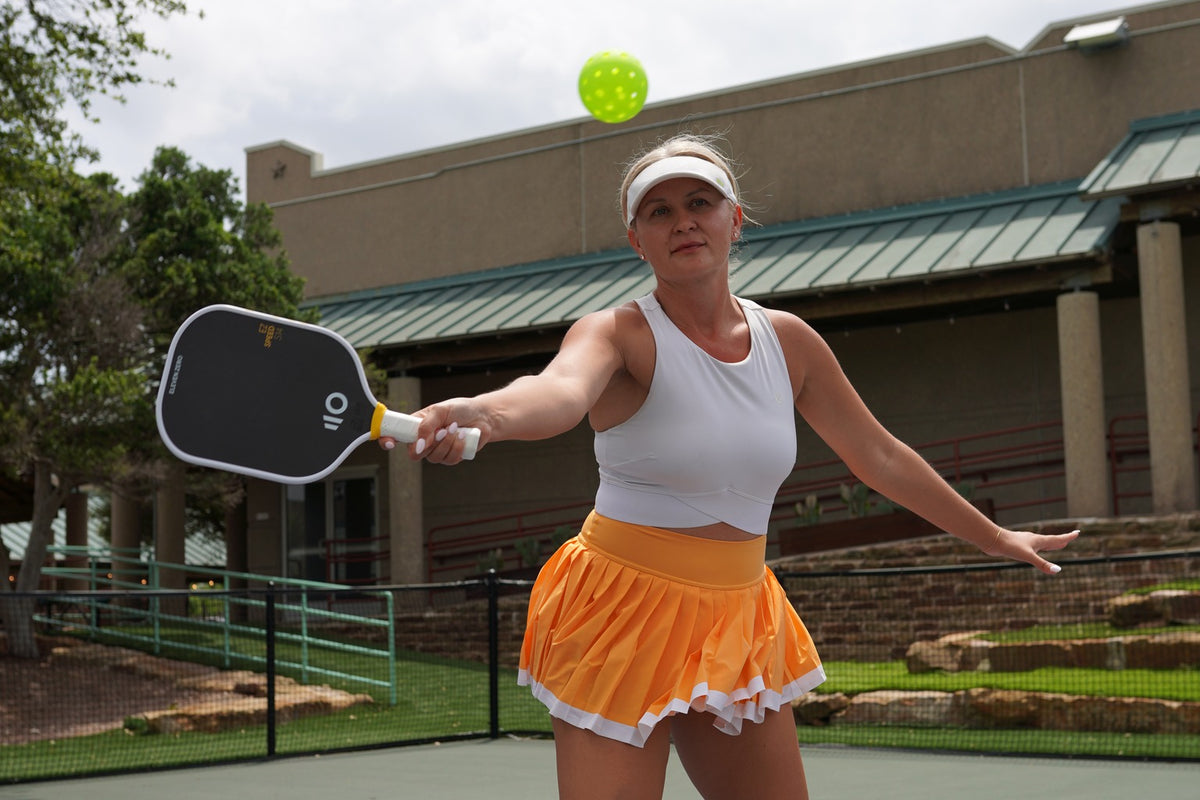
The short version: Pickleball is played on a 20x44 foot court with an underhand serve, games to 11 points, and a 7-foot no-volley zone called the kitchen on each side of the net. You need a paddle, outdoor balls, court shoes, and a bag. Learn control before you chase power, get to the kitchen line as fast as the rally allows, and call your own lines honestly.
So you've heard about this "pickleball" thing that's supposedly taking over tennis courts everywhere, and now you're curious. Good timing. What started as a backyard game in 1965 has become the fastest-growing sport in America. The Sports and Fitness Industry Association counted 24.3 million American players in 2025, up from roughly 4.2 million in 2020. Courts are going into parks, gyms, and converted tennis facilities faster than most cities can schedule them.
Here's the thing though. Pickleball is genuinely fun, easier on your body than tennis, and more social than most racket sports. You can also get decent at it without spending years perfecting your serve. The sport pulls in players from their twenties into their seventies, so a first-timer is not an oddity on any public court.
This guide will get you from "what's a kitchen?" to confidently stepping on any court. We'll cover the rules that actually matter, the gear you need and the gear you can skip, and the habits that keep you from looking like a complete newbie.
Understanding the basic rules: it's simpler than you think
Pickleball combines elements of tennis, badminton, and ping pong, but don't overthink it. The court is smaller than tennis (20x44 feet), the net is slightly lower (36 inches at the ends, 34 in the middle), and you play with what looks like an oversized ping pong paddle.
The scoring system (yes, it's weird at first)
Pickleball uses a unique three-number scoring system that confuses everyone initially, but stick with me. Games go to 11 points (win by 2), and you can only score when you're serving. The score is called as three numbers: your team's score, opponent's score, and which server you are (1 or 2).
So "5-3-2" means your team has 5 points, opponents have 3, and you're the second server on your team. The serving team gets two chances to score (both players serve) before the serve switches to the other team. The only exception comes at the start of the game, where the first serving team gets one server instead of two to keep things fair.
The serve: underhand and strategic
Unlike tennis, all serves must be underhand with the paddle head below your wrist at contact. You serve diagonally cross-court, and the ball must bounce once on the opponent's side before they can return it. Your team must also let the return bounce once before hitting it back. This is called the "double bounce rule" and it prevents aggressive net rushing.
After those two bounces you can volley the ball, meaning hit it out of the air, anywhere on the court except one zone.
The kitchen, or non-volley zone
The 7-foot area on both sides of the net is called the "kitchen" or Non-Volley Zone (NVZ). You cannot hit the ball in the air while standing in this zone, ever. You also can't step into the kitchen after hitting a volley, even if momentum carries you in.
This rule is what makes pickleball strategic rather than just a power game. It forces soft shots near the net (called "dinks") and creates the chess-match aspect that keeps players engaged. Most of the action in higher-level pickleball happens at the kitchen line with players dinking back and forth, waiting for the perfect opportunity to attack.
The kitchen line becomes your best friend once you understand positioning. Getting to that line quickly after serving or returning is what separates players who control rallies from players who react to them, but patience is key once you're there.
Essential gear: what you actually need
You need four things to play pickleball: a paddle, balls, court shoes, and something to carry your gear. That's it.
Choosing your first paddle: don't overthink it
The paddle market is wild right now with hundreds of options, but as a beginner, you want something that's forgiving, not too powerful, and won't break the bank while you're learning. Most beginners get seduced by the power paddles they see pros using. Learn control first, then add power later.
Look for paddles in the 7.5-8.5 oz range with a larger sweet spot. Avoid anything described as "hot" or "poppy" until you can consistently place the ball where you want it. A good beginner paddle should feel comfortable in your hand and not fight you on mishits.
If you're ready to invest in quality from day one, something like the EZ Power K-16 hits the sweet spot for new players who want a paddle they won't outgrow in three months. It has a soft feel with enough forgiveness for beginners and the performance ceiling to grow with your game. The gritty surface gives you solid spin capacity without being overwhelming, and the paddle is approved under the USA Pickleball equipment standard, so it is legal for USAP-sanctioned events if you catch the bug and want to compete.
Budget-conscious? Start with a composite paddle from a reputable brand in the $60-100 range. Avoid the $30 wooden paddles from big box stores. They're fine for your first few games, but you'll outgrow them quickly.
Pickleballs: outdoor vs. indoor matters
Outdoor balls have smaller holes and thicker plastic to handle wind and rougher surfaces. Indoor balls have larger holes and are softer. Most public courts are outdoor, so start there. Any ball on the USA Pickleball approved list will do the job. Buy a few, because you'll lose some and they crack with heavy use.
Shoes: court shoes, not running shoes
This isn't optional. Running shoes are designed for forward motion and don't provide the lateral support you need for pickleball's quick side-to-side movement. You'll roll an ankle eventually if you ignore this advice.
Look for tennis or cross-training shoes with good lateral support and non-marking soles. You don't need pickleball-specific shoes, though they exist. A quality court shoe from any major athletic brand works well, and it often costs less than the pickleball-branded options.
A proper bag: organization matters
Once you have paddles, balls, towel, water, and maybe a backup shirt, you'll appreciate having everything organized. A dedicated pickleball backpack keeps your paddle protected and has spots for all your gear. It also signals to other players that you're somewhat serious about the game, which matters when you're looking for partners at the court.
Finding courts and communities: where to play
This is where pickleball shines. The community aspect is unmatched in racket sports, and most players are welcoming to beginners because everyone remembers being new to the game.
Court options: from public parks to private clubs
Public courts are your best starting point. Many parks and recreation departments have converted tennis courts or built dedicated pickleball courts. These are usually free or very cheap ($5-10 per day). The USA Pickleball website has a court locator, and a plain web search for "pickleball courts near me" works just as well now that they're everywhere.
Community centers and YMCAs often have indoor courts and beginner programs. This is gold during bad weather or if you prefer a more structured learning environment.
Private clubs are booming, but they're pricey. Save these for later unless money isn't a factor. You'll get better instruction and nicer facilities, but the public court experience is part of pickleball's charm.
Apps and online resources
Pickleheads is like the social media for pickleball. You can find courts, connect with players, and join groups based on skill level and location.
PlayTime Scheduler helps organize games and manage court reservations if your local courts use it.
Global Pickleball Network has court listings and player forums.
Don't sleep on Facebook groups either. Most areas have active pickleball communities that organize games, share court conditions, and welcome new players.
Joining local clubs and leagues
Once you've played a few times, look into local clubs. Most areas have clubs that organize regular play sessions, tournaments, and social events. Membership fees are usually reasonable ($20-50 per year), and the benefits include reserved court time, organized games by skill level, and the social aspect that makes pickleball addictive.
Many clubs have "mixer" events specifically designed for newer players to meet partners and learn from more experienced players. These are perfect for building your network and improving your game.
Your first games: what to expect and how to not embarrass yourself
Your first time on the court will feel chaotic. The ball moves differently than tennis, the strategy is unfamiliar, and everyone seems to know some secret about where to stand. Here's how to handle those early games.
Court positioning: the fundamentals
After serving: Stay back. The double bounce rule means you need to let their return bounce, so don't rush the net immediately. Hit your serve, let them return it, then move forward while hitting your third shot.
After returning serve: Move toward the kitchen line immediately after hitting your return. The serving team has to hit from the back, giving you time to get into better position.
During rallies: Both teams want to get to the kitchen line for better angles and control. Most points are won and lost at the kitchen line, not from the baseline.
Shot selection: keep it simple
Forget about power for now. Focus on getting the ball over the net and in play. The player who makes fewer mistakes usually wins, especially at beginner levels.
The third shot drop decides more points than any other shot, and it takes practice. After the return of serve, the serving team needs to hit a soft shot that lands in the kitchen to neutralize the advantage. Don't try to blast it. Soft and accurate wins.
Dinking is an art form. These soft shots at the kitchen line control most rallies. Keep the ball low, aim for your opponent's feet, and be patient. The first player to get impatient and hit the ball high usually loses the point.
Common beginner mistakes to avoid
Standing too far back: Beginners love hanging out at the baseline like tennis. Get to that kitchen line as soon as the situation allows.
Hitting everything hard: Power feels good, but placement and consistency matter more. A well-placed soft shot beats a hard shot into the net every time.
Neglecting the middle: In doubles, shots hit between partners cause confusion. Communicate about who takes middle balls before you play.
Kitchen violations: Momentum counts as much as your feet do. If you hit a volley and your momentum carries you into the kitchen after the ball bounces on the other side, it's still a fault.
Getting too fancy: Stick to basic shots until they're consistent. Attempting around-the-post shots and erne attacks when you can't hit a basic dink is putting the cart before the horse.
Court etiquette: don't be that player
Call your own lines honestly. This is recreational play, not a professional tournament. If you're not sure whether it was in or out, it was probably in.
Keep the noise down between courts. Unlike tennis, pickleball courts are close together, and loud coaching or celebrating disrupts other games.
Be ready to play when it's your turn. Don't spend five minutes discussing strategy between every point.
Help newer players, but don't coach during games unless they ask. Everyone's trying to have fun.
Frequently asked questions
How long does it take to get decent at pickleball?
Most beginners can play competitive recreational games within a month of regular play (2-3 times per week). The learning curve is much gentler than tennis, so you'll have fun from day one and see consistent improvement for the first year. Getting to advanced levels (4.0+ rating) typically takes 6-12 months of dedicated play and practice.
Is pickleball really easier on your body than tennis?
Generally yes, for several reasons. The court is smaller (less running), the serve is underhand (easier on shoulders), and the ball moves slower (more time to react). However, you still need to be careful with lateral movements and quick direction changes. Many tennis players with joint issues find pickleball much more sustainable long-term.
What's a good beginner paddle budget?
You can get a decent beginner paddle for $60-120. Avoid the temptation to either go super cheap ($30 wooden paddles) or super expensive ($200+ premium paddles). You don't know your preferences yet, so mid-range gives you quality without breaking the bank. Plan to upgrade in 6-12 months once you understand your playing style better.
Should I take lessons or just start playing?
Both, honestly. A few beginner lessons will teach you proper technique and prevent bad habits, but the real learning happens through actual play. Many areas offer beginner clinics that combine instruction with supervised play, and those are worth the money. You'll pick up strategy and court positioning faster by playing with better players than you will from lessons alone.
What skill level should I play with as a beginner?
Look for other beginners or 2.5-3.0 rated players initially. Playing with people slightly better than you accelerates learning, but huge skill gaps aren't fun for anyone. Most communities have beginner-friendly sessions or "mixer" events that pair players appropriately. Ask about skill levels before you join a game, because everyone wants good, competitive matches.
Ready to start your pickleball journey
Pickleball's growth isn't slowing down, and there's never been a better time to start. Courts are everywhere, the community welcomes beginners, and the learning curve lets you have fun while you improve. You don't need perfect technique or expensive gear. Grab a paddle, find a court, and jump in.
The addictive nature of pickleball becomes obvious once you play a few times. The combination of strategy, athleticism, and social interaction creates something special that keeps people coming back. Some players come for light exercise, some come to compete, and some come to meet people. Pickleball covers all three.
Start with the basics we've covered, be patient with yourself, and embrace the learning process. Before long you'll be the one welcoming the next group of beginners to the court.
Share:
Best Pickleball Paddle for Tennis Players: What Carries Over
Best Pickleball Paddle for Advanced Players: What Changes at 4.5