


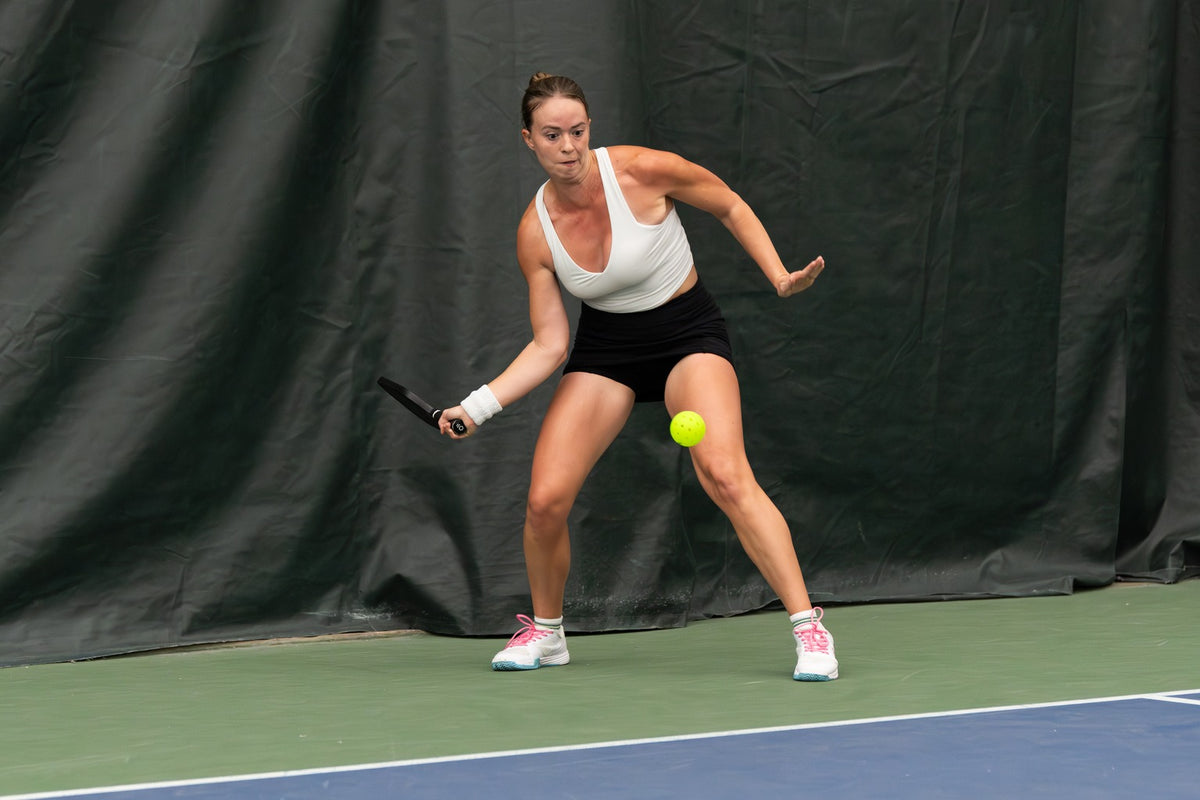
Quick answer: The best return of serve in pickleball is deep, high over the net and aimed at the middle of the court or the server's backhand. Depth matters more than pace because the two-bounce rule already forces the serving team to let your return bounce, so every extra foot of depth is extra time for you to reach the kitchen line before their third shot arrives. Hit it deep, then follow it in.
The return of serve is the one shot in pickleball that arrives with an advantage already attached. The serving team has to let it bounce, so they start every rally pinned behind their own baseline while you are free to move forward. Most 3.5 players spend that advantage on pace, trying to win the point with a shot that was never meant to win it.
A good return does one job. It buys you time to get to the kitchen line, and depth buys more time than speed does.
Why the receiving team starts ahead
The two-bounce rule says the serve must bounce before the receiver hits it, and the return must bounce before the serving team hits it. Only after those two bounces can anyone volley. In doubles that rule shapes where everyone stands. The returner's partner usually starts at the kitchen line, while the server's partner stays back at the baseline, because the next ball coming to their side must bounce before they can play it.
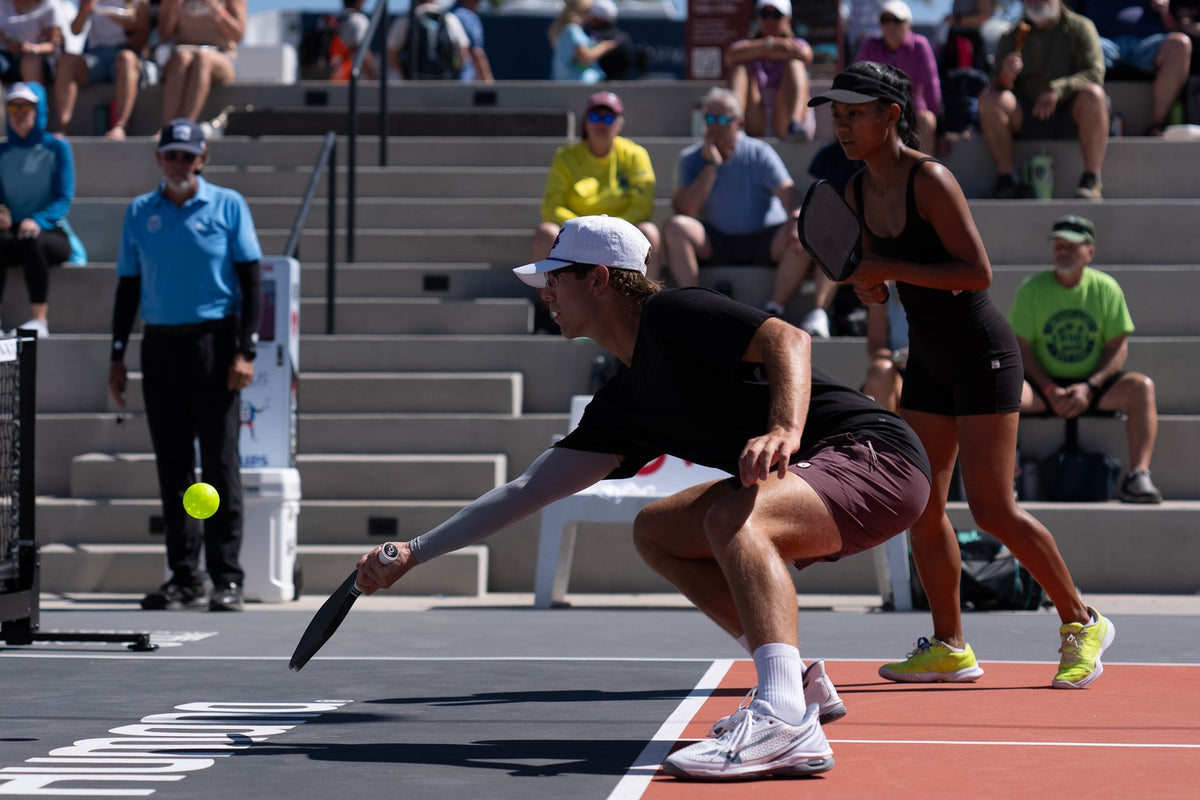
So the moment you make contact on the return, a race begins. You are moving from the baseline to the kitchen line, and the serving team is trying to hit a third shot that lands before you get there or forces you to play it on the move. The return decides how long that race lasts.
Depth buys time, pace spends it
A hard, low return feels aggressive, but it shortens your own clock. The ball reaches the server sooner, the third shot comes back sooner, and you are often caught a few steps behind the kitchen line with the ball at your feet. That stretch of court between the baseline and the kitchen is where most returning teams lose the point they started ahead on.
A deep return with some height does the opposite. The ball spends longer in the air, which is time for your feet, and it lands near the baseline, which pushes the server back. From that depth the third shot drop is a longer and harder shot to execute, and a third shot drive has more court to cover before it reaches you. Our guide to the third shot drop explains the shot you are making harder for them.
Pace still has a place. A firm return that also lands deep is better than a soft one that lands deep, but when the two goals conflict, choose depth every time.
Where to aim the return
The target is the back third of the court, and within it there are two good choices.
The middle is the safe default. A deep ball between the two opponents takes away the sharp angles they could use on the third shot and gives them a moment of doubt about who takes it. It also gives you the most margin for error, since the ball has no sideline to miss.
The server's backhand is the more pointed option. Most players hit a weaker third shot off the backhand side, and a deep ball there makes them hit it from an awkward position. Against a server with a strong forehand drive, this is the return that keeps that drive out of the rally.
Whichever you choose, give the net more clearance than feels natural. A return that skims the tape is only a few inches from becoming a lost point, and the extra height is what carries the ball deep.

The return errors that cost the most
In traditional side-out scoring only the serving team can win a point, so every missed return hands a point straight to the other side. That makes the return the worst shot in the game to gamble on, and the costly errors tend to look alike.
The first is going for a winner. A return aimed at the sideline at full pace misses often enough to give away more points than it earns, and even when it lands, the server usually has time to get a paddle on it.
The second is staying back. A deep return is only half the job if you admire it from the baseline, because the serving team then collects the time advantage you just created. Hit the return and move forward in the same motion.
The third is the short return. A ball landing near the middle of the court lets the server step in and drive from close range, and it takes away the time you needed to move up. If your returns keep landing short, the fix is usually more height over the net rather than a bigger swing.
How to return like someone who knows
- Start deep. Stand at or a step behind the baseline, because moving forward into a short serve is easier than backing up for a long one.
- Split step as the server makes contact. A small hop as their paddle meets the ball puts your weight forward and lets you move either way.
- Keep the backswing compact. The return needs control more than power, and a shorter swing leaves less to go wrong when the serve carries spin.
- Finish toward your target and keep moving. Let the follow through carry you a step into the court, then keep going toward the kitchen line.
- Split step again before the third shot. Wherever you are when the third shot leaves the opponent's paddle, stop and get balanced, then finish your approach after you have played the ball.
- Practice with a target. Lay a towel across the court about three feet inside the far baseline and count how many of twenty returns land behind it.
Where we land
The return is a full swing from the back of the court, often when you are slightly late, so the paddle property that helps most is stability on contacts that miss the center. The EZ Speed S14 is our widebody, with more face to either side of the sweet spot and a lower swing weight than our elongated models, and it is approved by UPA-A and USA Pickleball. If you prefer the elongated shape that most competitive players use, the EZ Speed E14 carries the same dual approval. Whichever face you choose, the return that wins rallies is the deep one you can hit twenty times in a row.
Win the race to the kitchen, and the return has done its job.
Frequently asked questions
What is the best return of serve in pickleball?
A deep return with good net clearance, aimed at the middle of the court or the server's backhand. Depth gives you time to reach the kitchen line before the third shot arrives, which matters more than pace.
Should you hit the return of serve hard?
Only if you can keep it deep. A hard, low return comes back faster and often catches the returner before they reach the kitchen line, while a deep return with some height buys time. When pace and depth conflict, choose depth.
Where should you stand to return serve in pickleball?
At or a step behind the baseline. Moving forward into a short serve is easier than backing up for a deep one, and starting deep keeps a long serve from jamming you.
Why do you move to the kitchen line after the return?
The serving team must let your return bounce, so they start the rally at the baseline. Moving to the kitchen line right after the return turns that head start into net position, which is where most doubles points are won.
How do you stop hitting returns into the net?
Aim higher. Give the ball more clearance over the net than feels natural and keep a compact swing, because the extra height is also what carries the return deep. Most netted returns come from trying to hit the ball too flat and too hard.
Can you volley the return of serve?
No. Under the two-bounce rule the receiver must let the serve bounce and the serving team must let the return bounce. Volleys are allowed only after both bounces have happened.
Share:
Singles vs Doubles Pickleball Paddles: What Changes
Pickleball Speed-Ups: When to Attack From the Kitchen