



You pick up two paddles that weigh the same on a scale and one feels completely different from the other. Faster, heavier, more head-heavy, more whippy. That's because static weight (the number on the box) is the least useful weight measurement for predicting how a paddle actually plays.
If you're shopping for a paddle based only on ounces, you're missing the full picture. This guide covers static weight, swing weight, and twist weight, what each one does to your game, and how to pick the right weight setup for how you play. If you already like your paddle and want it to play heavier or steadier, you can add weight with tungsten tape instead of buying a new one, and the placement section below shows where it goes and how much to use.
Static Weight: The Starting Point (Not the Whole Story)
Static weight is what you get when you put a paddle on a scale. It tells you how heavy the paddle is in your hand, but not how heavy it feels when you swing it. Two paddles at 8.0 oz can play like completely different animals depending on where that weight sits.
Think about holding a hammer by the handle versus by the head. Same weight. Totally different feel. Paddles work the same way.

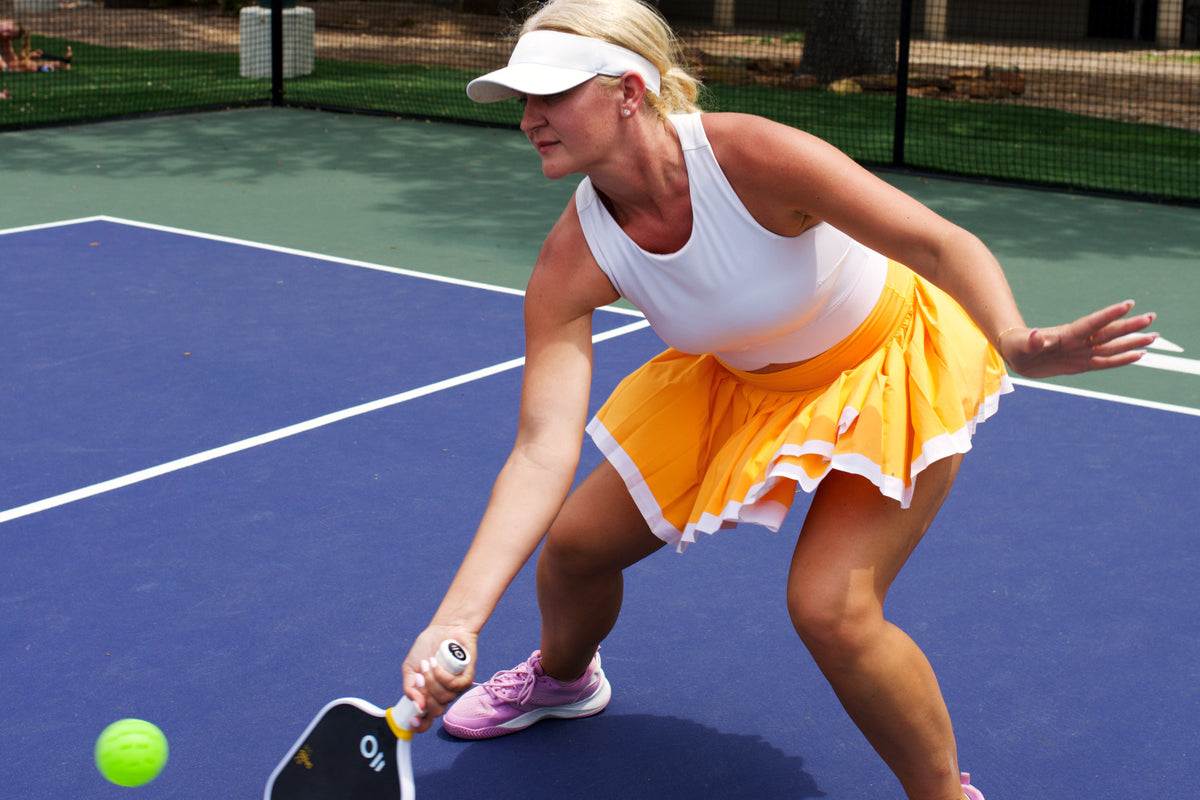
The EZ Pro Origin H13 at 7.8 oz sits in the midweight sweet spot.
Weight Ranges
- Lightweight (under 7.5 oz): Quick hands, easy on the arm. Players with wrist or elbow issues often start here.
- Midweight (7.5 to 8.2 oz): Where most paddles and most players land. Enough mass to drive the ball without fatiguing your arm over a long session. The H13 Pro Origin and the EZ Speed E14, both 7.8 oz, sit right in this zone.
- Heavyweight (8.2+ oz): Plow-through power on drives. The ball comes off with authority, but you sacrifice hand speed. A lot of singles players and hard hitters add tungsten tape to get here.
Static weight matters for comfort and fatigue, but it's a starting point. The real performance picture comes from swing weight and twist weight.
Swing Weight: How the Paddle Actually Feels When You Swing It
Swing weight measures how hard it is to rotate the paddle around a fixed point. It's the number that actually predicts how a paddle plays. Measured in kg·cm² (don't worry about the units, just compare the numbers).
A high swing weight feels head-heavy and powerful. You get that plow-through sensation where drives just blast through the ball. A low swing weight feels whippy and fast. Quick exchanges at the kitchen feel effortless because the paddle snaps into position.
Why This Matters More Than Static Weight
Two paddles. Both 8.0 oz. One has a swing weight of 108. The other sits at 122. On a scale, identical. On the court? Completely different paddles.
The 108 snaps through dinks and resets with minimal effort. Hands battles feel natural. The 122 generates missiles on full drives. The ball explodes off the face. But in a fast hands exchange? You're a half-step behind every time.
Examples from our own line:
- EZ Power K-16 (16mm, swing weight 120): The heaviest swing we make. Drives come easily, and kitchen work asks for more precision.
- EZ Speed E16 (16mm, swing weight 114): Plush and stable, with more power on drives than the E14 at the same swing weight.
- EZ Speed E14 (14mm, swing weight 114): The softer hit of our two Speed cores. Quick enough for hand battles and easy to reset with.
- Eleven Zero H13 Pro Origin (swing weight 110): A lighter swing than the elongated Speed paddles. Quick enough for kitchen battles, stable enough for drives.
- EZ Speed S14 (14mm, swing weight 106): The lightest swing in our line, with the widest face of our three Speed shapes.
Swing Weight Ranges
- Low (under 110): Quick, maneuverable. Great for doubles-heavy players who live at the kitchen. Less free power on drives.
- Medium (110 to 120): The all-around zone. Enough stability for drives, enough speed for the kitchen. Where most competitive players end up.
- High (120+): Power-oriented. Big drives, heavy serves. Requires good footwork and prep time because you can't muscle these into position at the last second.
Twist Weight: The Forgiveness Factor
Twist weight measures how much the paddle resists twisting when you don't hit dead center. High twist weight means the paddle stays stable on off-center hits. Low twist weight means the paddle face wobbles and your mishits spray.

How a paddle is built determines its weight distribution and feel.
For most recreational and intermediate players, twist weight might be the most important spec they've never heard of. If your contact point is still developing (it is for most people), higher twist weight quietly makes you a better player by cleaning up your mishits.
How to Think About Twist Weight
- High twist weight (6.5+): More forgiving. Off-center hits still go roughly where you aimed. The paddle holds its face angle on mishits. Wider paddles naturally have higher twist weight because the mass is spread further from the center.
- Low twist weight (under 6.0): Less forgiving but often lighter and more maneuverable overall. Elongated paddles tend to have lower twist weight because the narrow face concentrates mass closer to the center axis.
The practical takeaway: if you're making errors on balls you're reaching for or rushing to, you probably want more twist weight. If your contact is clean and you want maximum maneuverability, lower twist weight is fine.
Where to add weight: tungsten or lead tape placement
This is where you dial in exactly what you want. Weighted tape lets you change all three weight measurements after you buy, and tungsten does it without the handling concerns of lead. Ours is EZ Pro Grade Tungsten Tape, a half-inch-wide roll that runs 60 inches and weighs 60 grams, so each inch you cut adds one gram and the doses below are easy to measure.
For a paddle supplied with internal weighting, compare the EZ Power Carbon 16mm.

Tungsten tape lets you fine-tune swing weight, twist weight, and balance.
- Tape at 3 and 9 o'clock (sides of the head): Increases twist weight without dramatically changing swing weight. More stability and forgiveness on mishits. This is the most popular mod among competitive players and the one I'd recommend trying first.
- Tape at 12 o'clock (top of the head): Increases swing weight. More plow-through and power on drives. The paddle will feel heavier on swings but not in your hand. Good for players who want more authority from the baseline.
- Tape on the handle or butt cap: Counter-balances a head-heavy paddle. Adds static weight but actually decreases swing weight relative to the new total mass. Creates a more whippy, handle-heavy feel for players who want quicker hands.
Start with 2 to 4 grams at a time. On tape that weighs a gram per inch, that is a 2 to 4 inch strip in total, and at 3 and 9 o'clock you split it evenly so each side gets the same amount. Play a full session before adding more, because small changes make a bigger difference than you'd expect.
Matching Weight to Your Game
Skip the generic advice. Here's what actually matters based on how you play:
Kitchen-first doubles player: Lower swing weight (under 115), higher twist weight. You need hand speed more than raw power. A paddle like the EZ Speed E14 with tape at 3 and 9 gives you quick hands with added forgiveness.
Baseline driver / singles player: Higher swing weight (115+). Let the paddle's mass do the work on drives and serves. Add tape at 12 if you want even more plow-through.
All-around competitive: Medium swing weight (110 to 118), maximize twist weight with tape at 3 and 9. Best of both worlds. The H13 Pro Origin with room to customize is built for this approach.
Arm or wrist issues: Keep static weight under 8.0 oz and swing weight moderate. Less rotational force means less strain per swing. Lighter paddles with lower swing weight reduce cumulative stress over long sessions. See our guide to the best paddles for tennis elbow for specific recommendations.
Beginner figuring it out: Start midweight (7.5 to 8.0 oz static) with medium swing weight. This gives you balanced performance while you develop your game. Don't over-customize until you know what you like. Play for a few months, notice what frustrates you (not enough power? too slow at the net? arm fatigue?), then adjust.
The Bottom Line
Static weight is a starting point. Swing weight tells you how the paddle actually plays. Twist weight tells you how forgiving it'll be. Together, they give you the complete picture that the number on the box never could.
Next time you're paddle shopping, skip "how many ounces?" and ask: what's the swing weight? What's the twist weight? Where's the balance point? That's where the real performance lives.
Find your weight. Shop Eleven Zero paddles designed for easy weight customization.

Share:
How Paddle Core Materials Affect Control and Touch
Common Paddle Myths That Hold Players Back