


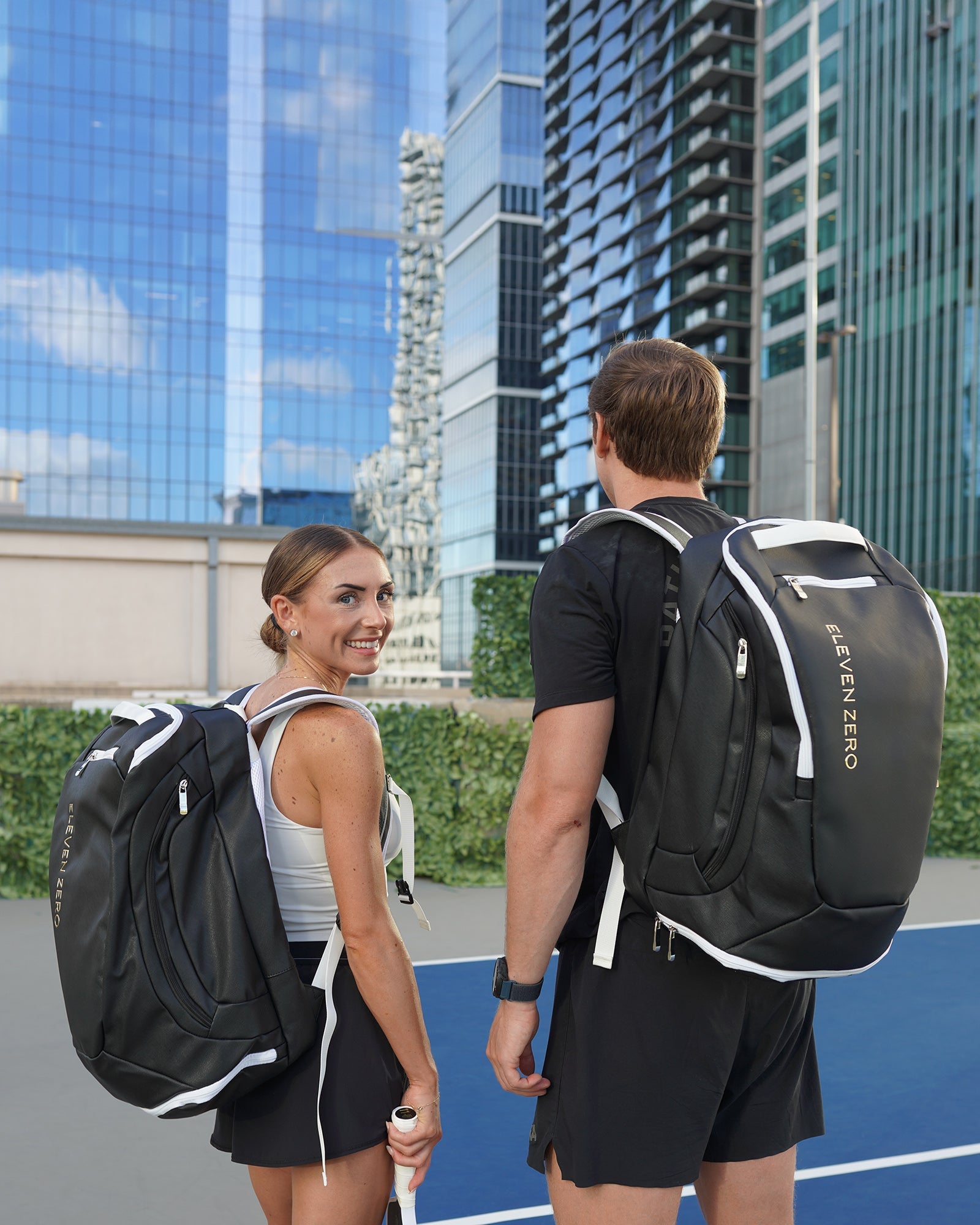
You've got paddles, balls, shoes, grips, tape, a water bottle, your phone, maybe a towel. All of it gets stuffed into a gym bag that smells like 2019. Sound familiar?
A dedicated pickleball bag isn't a luxury purchase. It's the difference between showing up organized and ready to play versus digging through a shapeless duffel while your court time ticks away. But the market has gotten weird. You'll see everything from $30 drawstring sacks to $200-plus rolling suitcases. Here's what actually matters.
The three things that separate a good pickleball bag from a bad one
1. Paddle protection that's actually separate
Your paddle is a $100 to $250 piece of carbon fiber and honeycomb core. Tossing it loose in a main compartment where it bangs against your water bottle and shoes is asking for edge guard damage and face scratches. A good pickleball bag has a dedicated paddle compartment that's padded, separated, and sized so paddles don't shift around. If the bag doesn't isolate your paddles from everything else, it's just a backpack with a logo.
2. Ventilated shoe storage
Court shoes after two hours of play are, let's say, not pleasant. A ventilated shoe pocket keeps them separated from your clean gear and lets them air out instead of marinating. This sounds minor until you open a bag that's been in your car for a day with sweaty shoes touching your overgrips. You'll never go back.
3. Organization that matches how you actually pack
Think about what you bring to the courts: paddles, shoes, balls (3 to 6 usually), water bottle, phone, keys, wallet, overgrips, lead tape, towel, maybe a change of shirt. A good bag gives each category its own space without making you play Tetris every time you pack. External water bottle pockets, quick-access phone sleeves, and internal mesh dividers aren't fancy features. They're basic functionality.
Backpack vs. duffel vs. sling: which style?
Backpacks are the sweet spot for most players. Two straps distribute weight evenly, they stand upright, and the structure keeps things organized. If you're biking to courts, walking from a parking lot, or carrying gear plus a cooler, backpacks win. They also tend to have the best compartment layouts for pickleball-specific gear.
Duffels work if you're carrying a ton of gear: multiple paddles for demo days, extra clothes, snacks for a tournament. The trade-off is less organization and more digging. Duffels are the "throw everything in" option.
Sling bags are minimal. One paddle, a few balls, phone, keys. Great for quick rec sessions where you're traveling light. Not great for anything beyond casual play.
For most intermediate-to-advanced players who play 3 or more times a week, a structured backpack is the right call. Enough capacity without being unwieldy, enough organization to keep your gear accessible.
Materials: what holds up and what doesn't
Stain-resistant exteriors matter more than you think. Pickleball courts are dusty, gritty places, especially outdoor courts. A bag that wipes clean after being set on a concrete court surface will look good six months from now. A bag that absorbs every scuff and stain will look beaten up in weeks.
Zippers are the failure point. Cheap bags save money on zippers first. YKK or equivalent quality zippers that glide smoothly and don't catch on fabric are the number one durability indicator. If the zippers feel rough out of the box, they'll fail within months of regular use.
Padding on straps and back panel. If you're walking any distance with paddles, shoes, and accessories, weight adds up fast. Padded, adjustable straps and a breathable back panel are the difference between comfortable and "why does my shoulder hurt."
Capacity: how much do you actually need?
Here's a rough guide based on playing frequency:
- Casual (1 to 2x/week): A bag that fits 2 to 4 paddles, shoes, and basic accessories. 20 to 25L capacity is plenty.
- Regular (3 to 5x/week): You'll want 4 to 6 paddle capacity, a dedicated shoe pocket, room for a change of clothes, and multiple accessory pockets. 30 to 35L is the sweet spot.
- Tournament/travel: 6-plus paddle capacity, room for a full day's worth of gear including food and extra clothes. 35L and up, or consider a duffel as a secondary bag.
Most players overestimate how much space they need until they get an organized bag. Turns out the problem wasn't capacity. It was the lack of compartments making everything feel crammed.
Eleven Zero makes a pickleball backpack that follows the same checklist below, but the right bag is whichever one actually fits how you play. Use the criteria here and buy on the merits, not the brand.
Compare the black EZ Pickleball Backpack and the white EZ Pickleball Backpack against your packing list.
Quick checklist before you buy
- Dedicated, padded paddle compartment (not just a main pocket)
- Ventilated shoe storage
- Stain-resistant or easy-clean exterior
- Quality zippers that glide smoothly
- Padded, adjustable shoulder straps
- External water bottle pocket
- Quick-access pocket for phone and keys
- Stands upright on its own (structured base)
Your paddle gets all the attention. Your bag does all the work. Choose accordingly.
Share:
Best Pickleball Paddles for Tennis Elbow (2026): Arm-Friendly Guide
What "Thermoformed" Actually Costs You