


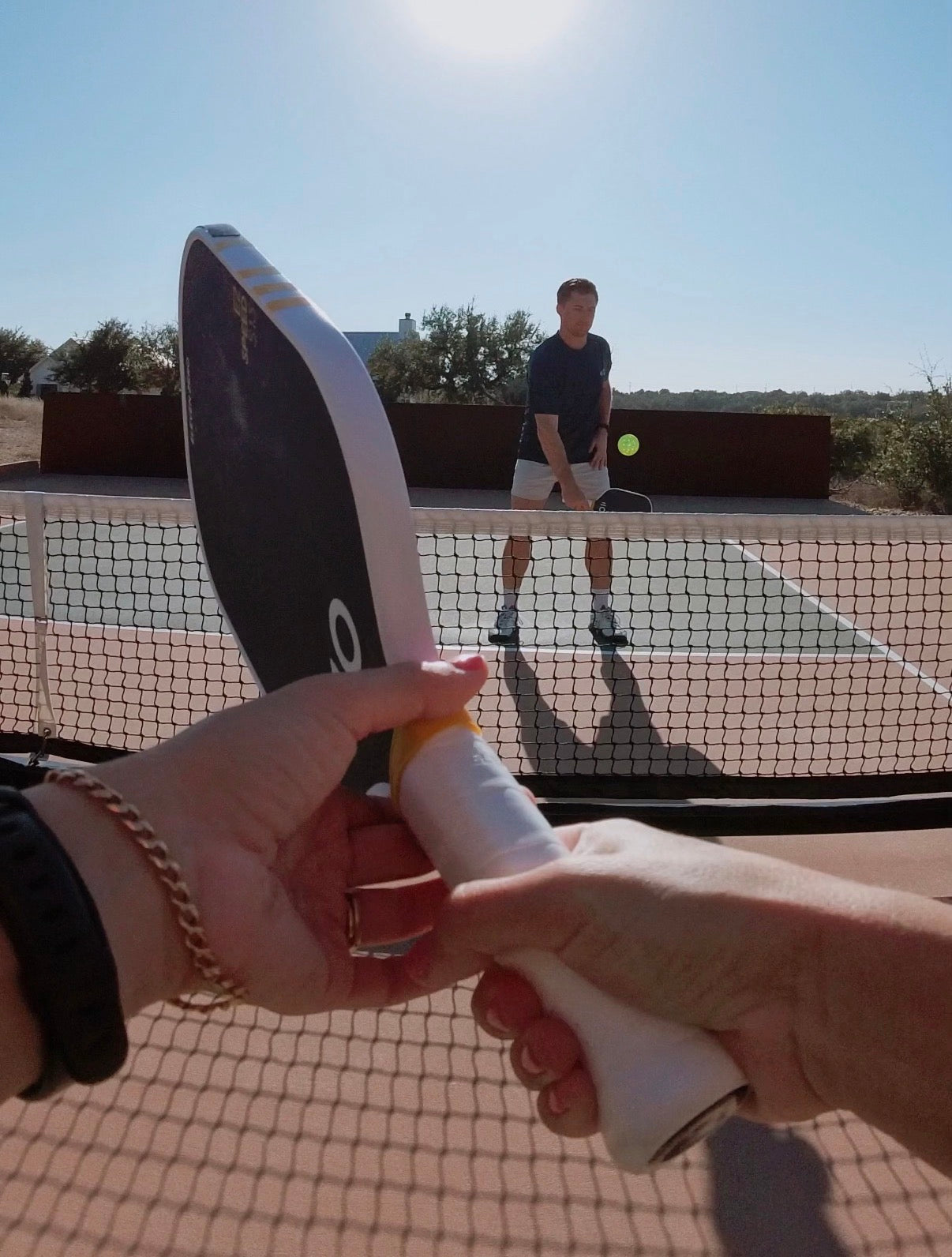

What Paddle Thickness Really Changes in Pickleball (and How to Choose 13mm vs 14mm vs 16mm)
Quick answer: Paddle thickness is the depth of the core, usually 13mm, 14mm or 16mm, and the core material decides what that depth does. In a polymer honeycomb core, thinner tends to mean more pop and power, and thicker means more touch. In an EPP foam core it runs the other way: the thicker core is the more powerful one. MPP foam sits closer to the honeycomb pattern. Choosing between 14mm and 16mm? Our 14mm vs 16mm comparison goes shot by shot.
Pickleball paddle thickness gets talked about like a cheat code: go thinner for power, go thicker for control. That rule was written about polymer honeycomb, the core inside most paddles for decades, and it still holds there. Foam cores changed the picture. In expanded polypropylene (EPP) foam, the extra depth adds power, so the thicker paddle is both the plusher one and the stronger one.
So before you read anything into 13mm, 14mm or 16mm, find out what the core is made of. This guide covers the three cores you will see on paddle listings, how thickness plays in each, what thickness changes no matter the core, and how to choose.
First: what “paddle thickness” means
When people say 13mm, 14mm or 16mm, they mean the core thickness plus the face layers. Three core materials cover nearly every paddle on the market:
- Polymer honeycomb: a grid of thin polypropylene cells. Light, crisp and predictable, and the standard core for most of the sport’s history.
- EPP foam (expanded polypropylene): foam beads fused in a mold, with the density set by how tightly the beads pack. It plays solid and connected, and makers tune the feel through density.
- MPP foam (microcellular polypropylene): gas injected into polypropylene to make one continuous structure full of tiny cells. It plays springier and livelier than EPP and damps vibration well.
Important note: Under USA Pickleball equipment standards, there is no restriction on paddle thickness (size limits exist, but thickness isn’t capped).
Certification bodies do set equipment limits that matter for play, including power (rebound) limits and dimensional caps on length and width. Thickness, though, is generally left to the player to choose based on feel.
How thickness plays in each core
Polymer honeycomb: thinner tends to hit harder
In honeycomb, a thinner core flexes and rebounds faster, so 13mm and 14mm paddles feel crisp, with more pop on counters, punch volleys and drives. A 16mm honeycomb core holds the ball a fraction longer, which makes dinks, drops and resets easier to keep low. That is where the old rule comes from, and for honeycomb it is a fair guide.
Our EZ Pro Origin H13 is a 13mm honeycomb paddle built for power, with a flex profile you can feel on every shot.
EPP foam: thicker is the more powerful core
Foam turns the honeycomb rule around. A 16mm EPP core is plush on contact, stable when the pace picks up, and stronger off the face, so the ball leaves with more pace for the same swing. Its tradeoff is managing that power on resets. The 14mm hits softer: resets come easier, counters come quicker, and you feel more of the ball, but you supply more of the pace yourself.
This is the core in our EZ Speed line: a dense EPP center, a soft EVA layer and hard edge foam, in 14mm (EZ Speed E14 and EZ Speed H14) and 16mm (EZ Speed E16).
MPP foam: closer to the honeycomb pattern
MPP is the newest of the three, and fewer paddles are built in both thicknesses, so treat this as a tendency. Makers that offer MPP at 14mm and 16mm describe the 14mm as the firmer, more immediate paddle on counters and aggressive swings, and the 16mm as the more connected, controlled one. That puts MPP nearer to honeycomb than to EPP. Test before you trust the rule.
Thinner vs thicker, core by core
|
Core |
13mm or 14mm |
16mm |
|
Polymer honeycomb |
Crisp, more pop and power |
More touch and control |
|
EPP foam |
Softer, easier resets, quicker counters |
Plush, stable, more power |
|
MPP foam |
Firmer, more immediate |
More connected and controlled |
What thickness changes in every core
1) Stability and the sweet spot
Thicker cores tend to feel steadier when you block hard balls and when contact lands off center, and many players read that steadiness as a bigger sweet spot. This holds across honeycomb, EPP and MPP.
2) Comfort and vibration
A thicker core usually feels plusher in the hand and passes along less vibration. A thinner core gives you more feedback, which some players want and others find harsh.

3) Soft shots (dinks, drops, resets)
Here the core decides. Whichever paddle sends the ball off faster also sends your resets faster unless your hands absorb it. In honeycomb that is the thinner paddle, so the 16mm is the easier one to reset with. In EPP foam it is the thicker paddle, so the 14mm resets easier and the 16mm asks for softer hands.
What thickness does not determine by itself
Spin
Spin is driven heavily by face material, texture (raw carbon, aramid blends, surface grit/texture) and dwell time the core type (not thickness) provides. Thickness can influence dwell feel, but it’s not the only lever.
For a 16mm honeycomb paddle with a carbon face, see the EZ Power Carbon 16mm. Compare the aramid face on the EZ Power K-16 if you prefer a softer contact feel.

“Good” or “bad”
There isn’t a universally best thickness, only the best match for your game, your format (singles vs doubles), and your priorities.
Quick comparison: 13mm vs 14mm vs 16mm
13mm honeycomb (EZ Pro Origin H13)
Best for: aggressive singles, off-the-bounce speed-ups, drive-heavy players, tennis converts
Feels like: crisp, quick, punchy
Tradeoff: built for power, so your touch game may take adjustment
14mm EPP foam (EZ Speed E14 and H14)
Best for: kitchen-line players who win with resets, dinks and quick counters
Feels like: softer off the face, quick, with plenty of feedback
Tradeoff: you supply more of the pace on drives and serves
16mm EPP foam (EZ Speed E16)
Best for: players who want more pace on drives, serves and attacks, with a stable face under pressure
Feels like: plush, stable, powerful
Tradeoff: the extra power takes softer hands on resets
16mm honeycomb (EZ Power Carbon 16mm and K-16)
Best for: players who build points with dinks and placement, then want weight behind the put-away
Feels like: calm and controlled at the kitchen, solid through the ball
Tradeoff: less built-in pop than a thinner honeycomb core. The EZ Power Carbon 16mm and the EZ Power K-16 add 8 grams of endcap weight, so the mass supplies the drive.
Which thickness should you choose?
Pick the core first, then the thickness that fixes the points you lose.
Choose 16mm EPP foam if…
- You want more pace on drives, serves and speed-ups from the same swing
- You want a plush, stable face when points speed up at the kitchen line
- You have the soft hands to manage extra power on resets
If you’re shopping Eleven Zero: the EZ Speed E16 is our 16mm build, made for stability and more power than our 14mm.
Choose 14mm EPP foam if…
- You win at the kitchen line with resets, dinks and quick counters
- You want the ball to come off softer so it stays low
- You like feeling the ball (more feedback)
For a 14mm Eleven Zero option, see the EZ Speed E14 or the EZ Speed H14. Deciding between 14mm and 16mm? Our 14mm vs 16mm comparison breaks it down shot by shot.
Choose thin honeycomb (13mm or 14mm) if…
- You win points through pace (drives, speed-ups, punch volleys)
- You want a crisp, fast response in hand battles
- You want flex and feedback you can feel on every shot
For a fast 13mm Eleven Zero option built for power, look at the EZ Pro Origin H13.
Choose 16mm honeycomb if…
- Your game is built on dinks, drops and resets
- You want a calm, controlled response at the kitchen line
- You like a heavier paddle that drives through the ball
See the EZ Power Carbon 16mm, or the EZ Power K-16 for an aramid face with a softer contact feel.
How to “tune” thickness feel without changing paddles
Even if you stick with a 16mm (or any thickness), you can tweak how it plays:
For the deeper breakdown, read our guide to static weight, swing weight, and twist weight.
Add tungsten tape for stability or plow-through
Weighted tape can increase stability and change how solid the paddle feels through contact. Adding an overgrip will increase weight further and provide shock absorption for a more plush feel. A small amount of tungsten tape at the edges, paired with an overgrip, is an easy way to dial in that kind of tuning.
Swap grips for better touch + control
Overgrips can change connection to the paddle (comfort, traction, and control), especially in sweaty or high-tempo games.
FAQ: Paddle thickness questions players actually ask
Does a thicker paddle give you more control?
In honeycomb, usually yes: a 16mm honeycomb core is the easier one for dinks and resets. In EPP foam, the 16mm is the more powerful paddle, so if control means keeping resets low, the 14mm makes that easier. In every core, thicker tends to feel more stable.
Does a thinner paddle always hit harder?
No. Thinner tends to hit harder in honeycomb and in MPP foam. In EPP foam the 16mm hits harder than the 14mm. Ask what the core is made of before you read anything into the thickness.
What is the difference between EPP and MPP foam?
Both are polypropylene. EPP is made of fused foam beads and plays solid and connected. MPP is one continuous structure of tiny cells and plays springier. They also respond to thickness differently: thicker EPP adds power, while MPP leans toward the honeycomb pattern.
Is paddle thickness regulated?
Under USA Pickleball equipment standards, thickness is not restricted (though length/width limits apply).
Some other organizations and sanctioning bodies set their own equipment limits, mostly around power and overall dimensions rather than core thickness.
Will thickness improve my spin?
Spin depends heavily on the face material/texture and your technique. Thickness can affect dwell feel, but it’s not the primary spin lever.
Bottom line: core first, then thickness
Thickness pushes a paddle in different directions depending on the core:
- Honeycomb: thinner for pop and power, thicker for touch
- EPP foam: thicker for power and a plush, stable face, thinner for softer resets and quicker counters
- MPP foam: closer to honeycomb, with a firmer 14mm and a more controlled 16mm
If you’re not sure, choose the paddle that helps you most in the situations you face every game. Losing points on resets that sit up? Go to the softer option in your core: 16mm honeycomb or 14mm EPP. Struggling to finish points? Go the other way, or tune your setup with tape and grip.
Want a risk-free way to confirm your fit? Eleven Zero paddles purchased directly from the store come with a 30-day paddle performance guarantee (and free return on U.S. paddle orders).
Also on Amazon. If Amazon is where you prefer to buy, the EZ Speed E16 is listed there with Prime shipping: EZ Speed E16 on Amazon.




Share:
Welcome to Eleven Zero Sports
14mm vs 16mm Pickleball Paddles: The Real Difference