



You started with whatever paddle came in the set. Maybe a wooden one from Amazon, maybe a starter from your local rec center. It got you hooked. Now you're playing three, four times a week, your dinks are developing, you've got a backhand you actually trust, and that beginner setup is holding you back.
You know it. You can feel it. The ball doesn't go where you want. The sweet spot is tiny. Your drives have no authority. It's time to upgrade.
But the paddle market is an absolute jungle right now. Prices run from bargain-bin to ridiculous, and every brand claims their paddle is the one. According to Pickleball Central, approved paddle options now number in the thousands. Here's how to cut through the noise and find the right first serious paddle for your game.
Step 1: Understand What You're Actually Buying
A pickleball paddle has three core pieces that determine almost everything: the core, the face, and the shape. Every other spec, weight, balance, sweet spot size, power, spin, flows from those decisions.
Core: The Engine
Almost every serious paddle uses a polypropylene honeycomb core. Thickness changes the feel dramatically:
- Thin cores (13mm): More power, more pop, smaller sweet spot.
- Thick cores (16mm): More control, more forgiveness, softer touch on dinks and resets.
- Mid-thickness (14mm): The middle ground. For a lot of improving players, this is the most forgiving place to start.
If you want the detailed version, our breakdown of 14mm vs 16mm paddles explains the tradeoffs clearly.
Face Material: What You Feel at Contact
Face material changes how the ball comes off the paddle:
- Carbon fiber: Controlled, connected, consistent.
- Fiberglass: More rebound and easier power.
- Kevlar or aramid blends: Softer feel, more dwell, and excellent touch.
USA Pickleball equipment standards govern legal paddle construction, but within those limits, face material still changes everything about feel. For more on this, read our guide to carbon fiber vs fiberglass.
Shape: Reach vs Forgiveness
Elongated paddles give you more reach and leverage. Wider paddles give you more forgiveness. Hybrid shapes try to split the difference. Most players buying their first serious paddle do better with a forgiving hybrid or standard shape than a full elongated model.
Our article on paddle shapes explained is worth reading before you buy.
Step 2: Be Honest About Your Game
Most bad paddle purchases happen because players buy for the version of themselves they want to be, not the version that actually shows up on court.
- If you miss long and struggle with touch, buy more control.
- If you dink well but can't finish points, buy a little more pop.
- If off-center hits die on you, prioritize forgiveness and twist stability.
- If your hands feel slow at the line, pay attention to balance and swing weight.
If you're not sure what style actually fits you, start with our guide on choosing a paddle based on your playing style.
Step 3: Start With a Paddle That Lets You Improve
Your first serious paddle shouldn't just patch a weakness. It should give you room to grow.
For players who want control and forgiveness, the 16mm EZ Speed in the S16 or H16 build is a strong step up. It has a plush feel, great touch, and enough spin potential to keep developing with your game.
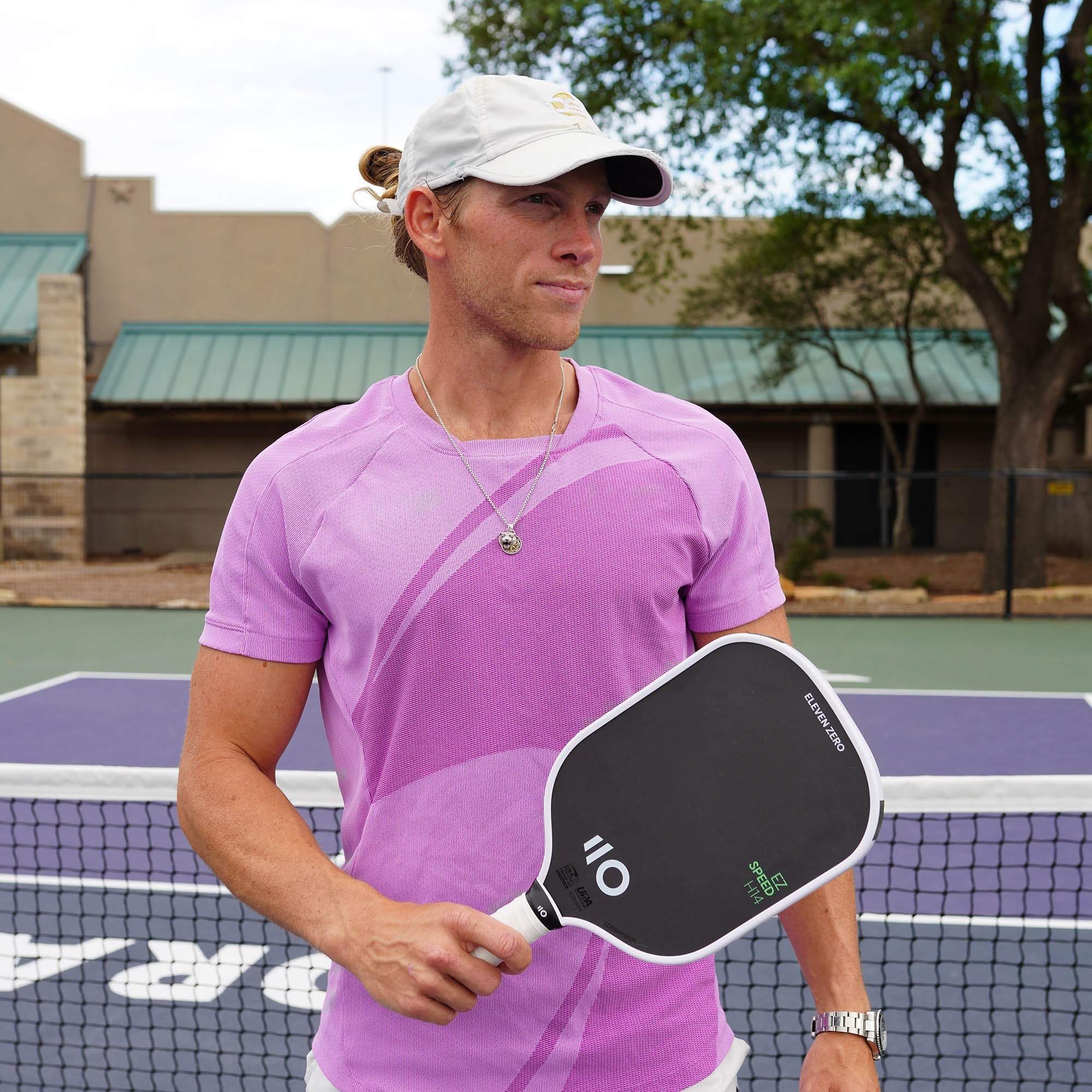
If you want a firmer, more direct carbon feel, the 14mm EZ Speed (the S14 or H14 build) is another smart first serious paddle. It gives you a quicker, more connected response without pushing you into an unforgiving power profile.
If your game already leans more aggressive, the EZ Pro Origin H13 gives you a faster, more explosive option with a higher-level ceiling. Its flex-profile power and soft matte carbon face reward a player who already swings with intent.
Step 4: Don't Ignore Weight and Setup
Two paddles with the same listed static weight can feel completely different. That's why swing weight and twist weight matter. Our article on static weight, swing weight, and twist weight breaks down why.
If you're close to loving a paddle but not quite there, setup changes can help. A little tungsten tape can add stability or shift balance. A fresh overgrip can improve comfort and control immediately.
Step 5: Buy for the Shots That Decide Your Games
At rec and club level, most matches aren't decided by highlight-reel winners. They're decided by resets, blocks, third shots, and whether you can survive pressure without gifting points.
If your next paddle helps you hit more quality balls in those moments, that's the right one. This is also why so many players eventually care more about control and forgiveness than raw power. You can always swing harder. You can't fake feel.
Professional players know the same thing. Watch high-level doubles on the PPA Tour and you'll see a lot more point construction than wild blasting.
Common Buying Mistakes
- Buying too much paddle: If a paddle feels hot and exciting for five minutes but makes your drops and dinks worse, it's the wrong fit.
- Ignoring forgiveness: Mishits happen. A serious paddle should still help you survive them.
- Chasing pro gear blindly: The paddle a pro uses isn't automatically the right paddle for your current level.
- Obsessing over one spec: Weight, grit, core thickness, shape, all of it works together.
FAQs About Buying Your First Serious Paddle
Q: What's the best first serious paddle for an improving player?
Usually a balanced or control-leaning paddle with a forgiving sweet spot. Most players improve faster with predictability and touch than with maximum power.
Q: Should I go straight to a premium paddle?
If you're playing regularly and know you're committed, yes, it can make sense. Just buy the right premium paddle, not the flashiest one.
Q: Is thermoforming worth it for a first serious paddle?
It can be. Thermoforming is mainly a power and energy-transfer method, so it helps a paddle return more pace, not automatically last longer. Durability comes down to the core: honeycomb cores can crush over time, while foam tends to age more gracefully. Our article on what thermoforming is explains how it works.
Your first serious paddle should make the game feel simpler, not harder. If it gives you more confidence on your worst day, you picked well.
Ready to upgrade? Shop Eleven Zero paddles and pick the one that matches how you actually play.
Also on Amazon. If Amazon is where you prefer to buy, the EZ Speed E16 is listed there with Prime shipping: EZ Speed E16 on Amazon.

Share:
7 Doubles Strategies That Separate 3.5 Players from 4.0+
Static Weight, Swing Weight, Twist Weight: What Actually Matters