


Quick answer: Pickleball paddle certification is sample-based. A brand mails a handful of sample paddles to a lab. The badge proves the sample passed, not that your specific retail unit matches it. Honest brands submit and sell the same paddle. That consistency, not the sticker, is what makes the certification true for the paddle in your hand.
There is something almost nobody tells you about the little "approved" stamp on a pickleball paddle. The certification was earned by a few sample paddles the brand mailed to a lab. It was not earned by the specific paddle in your hand.
That gap, between the sample that gets tested and the unit you actually buy, is one of the least understood parts of buying a paddle. It is also where the honest brands quietly set themselves apart. Here is how to read it.
How certification actually works
When a brand wants a paddle approved, it sends a batch of sample paddles to a testing lab. Two standards matter here. USA Pickleball (USAP) is the national governing body's standard, and UPA-A is the standard the PPA Tour plays under. The lab measures those samples against the legal limits for power and spin.
UPA-A then goes one step further, and it is the step that matters most. It puts the paddle through destructive break-in testing. Instead of measuring the paddle only when it is brand new, the lab deliberately wears it down and measures it again, because a paddle is only fair if it is still legal after it has been played in. A paddle earns full UPA-A approval only if it passes both when new and after that break-in. That second measurement is the whole story, because it catches the two ways a paddle on a store shelf can drift away from the sample that passed.

The two ways your paddle drifts from the tested sample
- It passes new, then gets hotter with age. Some paddles gain power as they wear in. A honeycomb core can slowly crush in the middle, leaving a small void that the face flexes into, so the paddle returns more energy to the ball than it did on day one. Players describe it as the paddle waking up. What is actually happening is the paddle aging its way past the legal limit: legal when new, and over the line a couple of months later.
- The sample is not the same as the retail unit. Certification is based on a few hand-picked samples, and nothing guarantees that a brand's mass-produced paddles match them. Tight quality control keeps the retail paddle identical to the one that passed. Loose quality control, or a sample built tamer than what actually ships, lets the two drift apart.
None of this is a fringe problem. A large share of the paddles that go through full UPA-A testing fail it, because the pro standard is strict and unforgiving. Failing the test is not the rare exception in this category. It is closer to a coin flip.
The problem most players can't see
Sitting right at the legal limit is the goal for every serious brand, because that limit is the most power and spin a paddle is allowed to give you. Going past it is not an edge, it is illegal, and it is also unsafe. The power cap exists in large part for safety. Pickleball is played with opponents standing a few feet apart at the kitchen line, and once paddles got hot enough to spring the ball back with unnatural speed, players started reporting bruises and injuries. The limit is there to keep a friendly hands battle from breaking someone's hand.
Here is where it gets tricky. A paddle that was perfectly legal in the box can creep over the line after a few months of play, and the person swinging it usually has no idea. This is most common in the 3.0 to 4.5 rec range, where a player who has happily broken in a favorite paddle is often holding something hotter than the rules allow. They are not cheating. There is simply no easy way to tell, and the result is unfair play and a genuine safety risk created by someone who thinks they are doing everything right.
That is the real industry problem. Unlike most racket sports, pickleball depends on expensive lab testing to decide whether a paddle is legal, and a rec player has no practical way to check the paddle in their bag. The sport is starting to close that gap. In 2026, USA Pickleball began testing paddles on site at tournaments, pulling real paddles from real players rather than trusting the lab sample alone. At recent sanctioned events it checked more than two thousand paddles, and roughly one in seventeen failed. Keep in mind those are tournament players, the crowd most likely to keep their equipment current. In a casual park game, where nobody is checking and a favorite paddle stays in the bag for years, the share of over-limit paddles is almost certainly higher. Our own read is that it lands closer to one in five or six. That is a lot of people who believe they are legal and are not.
The fork every brand reaches
Every brand that submits a paddle reaches the same fork in the road.
One path is to toe the line. A legal paddle sits right at the limit for power and spin, and that limit is what every serious brand builds toward, because it is the most a paddle is allowed to deliver. The honest move is to engineer the paddle to hold at that limit for its whole life, so the sample, the paddle on the shelf, and the paddle two months into a season are all the same legal paddle. You are not backing away from the ceiling. You are building right up to it and then making sure the paddle never drifts past it.
The other path is to game it. Send the lab a tame sample, then sell a hotter paddle to everyone else. Or cut corners on the quality control that keeps retail paddles consistent, and hope the spot checks never come. It works right up until it does not.
It eventually fails because the system is designed to catch it. USA Pickleball also pulls samples straight off store shelves and checks them against what the brand originally got approved. Paddles get decertified for precisely this: failing to keep production consistent, or misrepresenting what the paddle actually is. When a flagship gets pulled from the approved list, the press release calls it bad luck. More often, it is a brand that let its retail paddles drift away from the sample, or chased a power number it was never going to keep legal.
Why a badge alone cannot be trusted
Here is the part the approved list will not tell you. Even with USA Pickleball running its checks, a large share of the paddles being sold today are over the legal line, and the problem is worst under the USAP banner. This is not a hunch. An independent test of 42 USAP-approved paddles recently found that 40 of them, about 95 percent, failed USA Pickleball's own surface-roughness standard. The badge said legal. The paddles were not.
How does that happen at that scale? Through the same two failures we already described, run at industrial volume. The retail paddle stops matching the sample that passed, and sometimes that is deliberate. Some factories will even coach the brands they build for to sand a paddle's face down just enough to clear the test, then ship the grittier, livelier version to customers. USA Pickleball has delisted a handful of brands for exactly this, including at least one that admitted its production paddle differed from the one it submitted. But a handful is a small dent in a problem this size, and that is before you count the counterfeits, paddles stamped with a real brand's name that never passed anything at all, now common enough that the pro side calls them a threat to the sport. The sticker on the paddle, on its own, does not promise what most players think it does.
Why two certifications is not automatically better than one
It is tempting to assume two badges beat one. The truth is more interesting, because USAP and UPA-A are used by different events and do not even measure spin the same way.
Start with where each one matters. UPA-A is what the PPA Tour requires. USAP is what the APP Tour uses, and it is the standard behind most amateur and sanctioned play, where events will often accept either certification or both. So a second badge is mostly about where you are allowed to compete, not about how good the paddle is.
Now look at how they test. USAP limits the surface: it caps how rough and how grippy the face is allowed to be, and it checks the paddle when new. UPA-A limits the result: it fires a ball at the paddle, films the contact, and measures the spin the paddle actually puts on the ball, then checks it again after break-in.
Both standards are trying to limit the same thing: a paddle that generates too much cheap spin. Because they measure different parts of it, they pull in different directions, and that creates a tradeoff most people miss. To pass both, a dual-certified paddle has to live inside the overlap of two rulebooks, so it cannot push all the way to the limit of either one. On grit, for example, it has to sit at the stricter surface cap, which leaves it a little less bite than a paddle tuned for UPA-A alone.
That makes two badges a convenience, not a performance upgrade. A dual-certified paddle is legal almost anywhere you might play, which is genuinely useful, and it can still be an excellent paddle. It just will not be the single most maxed-out option for any one tour, which is why you will not see a pro at a PPA event reaching for one. A touring pro only needs UPA-A, so they play a paddle built to that limit and nothing else. One certification is not a red flag, and two is not a trophy. Two approvals tell you where you can play, not how hard the paddle hits.
How to read a certification like someone who knows
- A badge certifies a model's sample, not your unit. Treat it as necessary, not sufficient. What makes it true for the paddle in your hand is the brand's consistency.
- Ask whether it passed break-in testing, not just the day-one measurement. The claim that matters is that the paddle is still legal once it is worn in.
- Two badges mean reach, not a hotter paddle. They tell you the paddle is legal under both standards, so you can play it at more events. They do not mean more power or spin, and they cannot max out either rulebook the way a single-standard paddle can.
- Pay attention to what a brand brags about. A brand that talks loudly about day-one power but goes quiet on aging and quality control is steering you away from the questions that matter.
- A banned paddle is not always bad luck. Often it is the predictable end of a paddle engineered past what it could hold, or a sample that never matched what reached the shelf.

Where we land
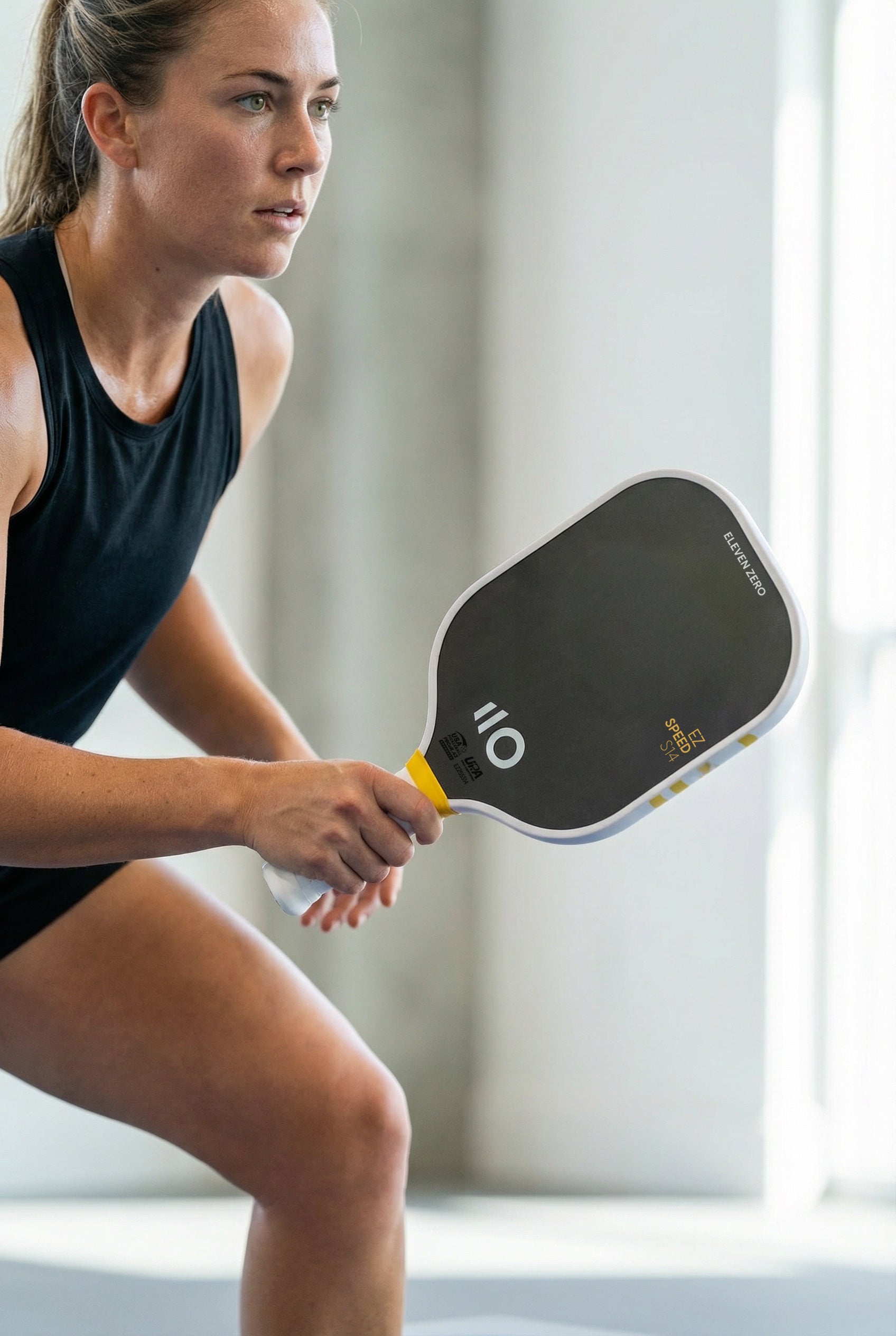
We build the EZ Speed line right up to the legal limit for power and spin. These are not watered-down paddles. They are as fast and as grippy as the rules allow. What we are proud of is how they age: a foam core tuned to fade gradually as it wears, instead of spiking hot or wearing smooth and going dead early. Every legal paddle shares the same ceiling. The only honest question is who actually reaches it without cheating. We do.
We build the line first to the UPA-A standard, the one the PPA Tour plays under and the one that re-tests a paddle after break-in. Our E14 and S14 also carry USAP certification, so they are legal under both standards, for players who want one paddle they can take to any event.
We know the failed-test side of this firsthand. Not every paddle we have built has passed. When one does not clear the bar, it does not get a badge it never earned, and we do not dress it up as approved. Building right at the limit costs real time and real money, and every so often a paddle dies at the lab. We are not the brand that games the test.
So we will never tell you we found a loophole that makes our paddle hit harder than the rules allow. We build to the line, not past it. We submit the real paddle, we sell the real paddle, and we make sure the one you own is the one that passed. A paddle at the legal maximum, with no asterisks, is the whole pitch.
See the construction and certifications listed for the EZ Speed E14
The badge was earned by a sample. Whether your paddle deserves it is a question about the brand, not the sticker.
Frequently asked questions
How are pickleball paddles certified?
A brand submits a set of sample paddles to a testing lab. The lab measures power and spin against the legal limits, and full UPA-A certification also requires passing destructive break-in testing to confirm the paddle stays legal after it is worn in.
What is the difference between USAP and UPA-A certification?
USAP is USA Pickleball's standard. It is what the APP Tour uses and what most amateur and sanctioned events require. UPA-A is the standard the PPA Tour plays under. The two are independent, so a paddle can be approved by one and not the other, and many amateur events accept either one or both. A dual-certified paddle is legal under both, which is a convenience rather than a performance upgrade, because meeting both rulebooks means a paddle cannot push all the way to the limit of either one.
Why do pickleball paddles get decertified or banned?
Paddles are decertified for exceeding the power or spin limits, for failing destructive break-in testing, or for failing to maintain consistent production standards, meaning retail units drifting from the approved sample. USAP also inspects market samples pulled from retail to catch discrepancies.
Does a certified paddle stay legal as it wears?
Not always. Some constructions get hotter as they age due to core crush, which can push a once-legal paddle over the limit, and that is why break-in testing matters more than the day-one number. Paddles built on engineered foam cores tend to fade gradually.
How do I know if my pickleball paddle is still legal?
It is genuinely hard to tell on your own. A paddle that passed when new can drift over the power or spin limit after months of play, with no obvious sign and no simple at-home test. Your best protection is to buy from a brand that engineers its paddles to stay under the limit as they wear, to confirm your model is on the current approved list, and to retire a paddle that has clearly changed how it plays. In 2026 USA Pickleball also began testing paddles on site at tournaments to catch illegal ones in play.
Is the EZ Speed E14 certified?
Yes. The EZ Speed E14 is dual-certified by both USAP and UPA-A, and is built on a foam core tuned to fade gradually as it ages rather than drifting hot.

Share:
What "Thermoformed" Actually Costs You
Is Your Pickleball Paddle Still Legal? How to Check Before a Tournament Does It for You