


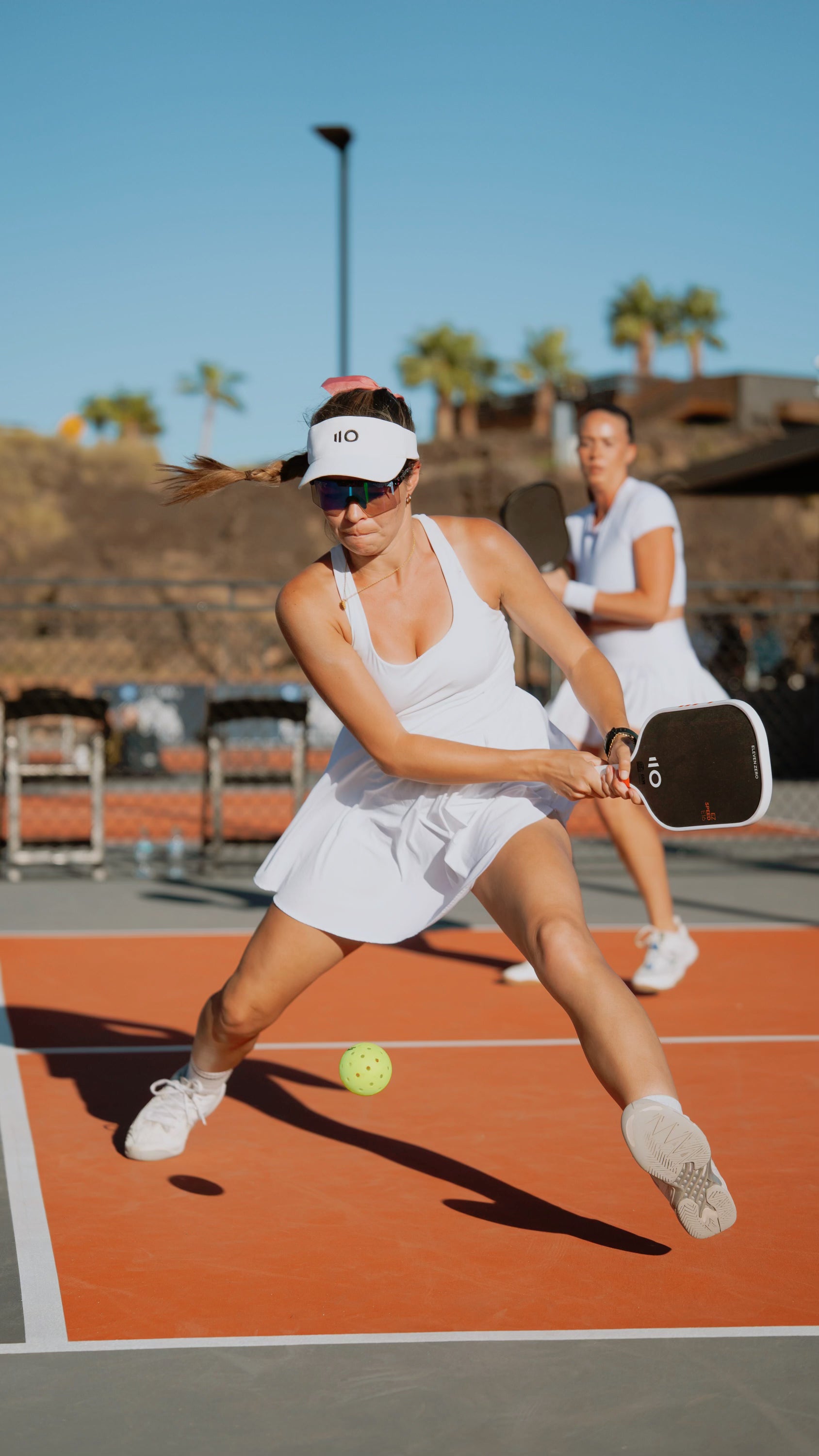
Camila Zilveti: The Pro Who Builds Her Own Paddles
By Brian Kerr
Most paddle companies hire a pro after the product is done. Slap a signature on it, film a promo video, call it a collaboration. Camila Zilveti co-founded Eleven Zero. She didn't endorse our paddles. She helped design them, test them, break them, and redesign them until they played the way she needed them to on the PPA Tour.
That's a fundamentally different thing, and it shows up in every paddle we make.
How She Plays
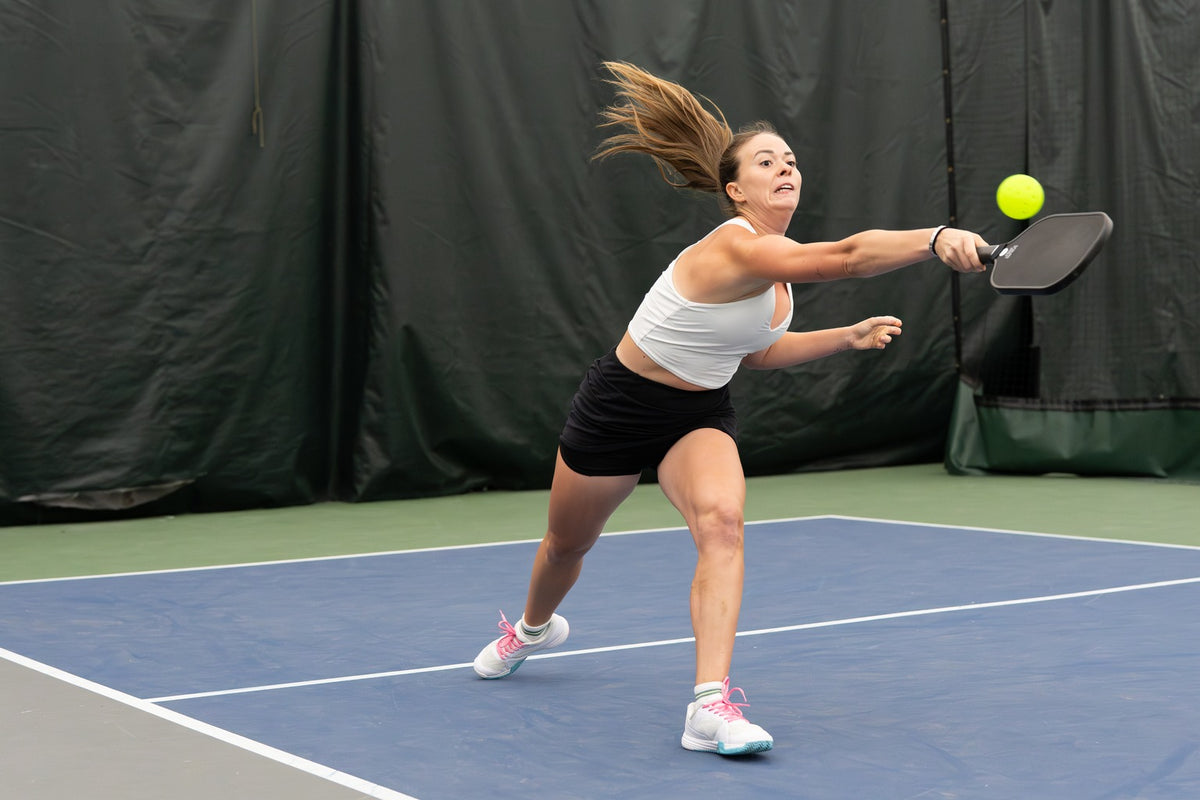
Camila's game is built around the kitchen line. She's a machine. She'll dink cross-court all day, changing pace and placement until her opponent gets impatient and pops one up. Then she ends it. Quick hands, clean put-aways, zero wasted motion.
Her forehand is reliable and well-placed rather than overpowering. She doesn't try to rip winners from the baseline because she doesn't need to. She constructs points with resets and dinks, controlling the tempo until she gets the ball she wants. It's the kind of game that frustrates power players because there's nothing easy to attack.
Where she really separates is on defense. Her resets are soft and low, absorbing pace and redirecting with just enough touch to land in the kitchen. Grip pressure stays light, and she reads her opponent's paddle angle early enough to be in position before they've finished their swing. That anticipation comes from thousands of hours of competitive play, not just athleticism.
Her backhand is arguably the more dangerous side. She generates surprising pace from compact swings, using the paddle's weight distribution rather than a big windup. In fast-hands exchanges at the net, she's decisive. She picks a side and commits. No hesitation, no panic flicks.
From Player to Paddle Designer
That playing style shaped the product line. Camila doesn't want random pop. She wants a paddle that responds the same way over and over again, especially in transition, at the line, and under pressure.
That's why the lineup leans hard into feel, stability, and usable performance. She cares about whether a paddle resets cleanly, holds firm on off-center blocks, and still gives players enough offense to finish points when the ball sits up.
Her feedback has influenced everything from face feel to shape and balance. That includes the way our thermoformed builds respond on contact and the way our softer options stay connected through dinks and blocks.
What She Actually Uses and Recommends
For players who want a paddle that mirrors her touch-first style, the EZ Pro Origin H13 is the obvious starting point. In 2026 she is now playing with the EZ Pro Origin H13, and its flex profile gives the kind of plush, stable feel that rewards soft hands and patient point construction. It also adds pace and speed through contact, the touch and feel the pro level demands.
If you want more of an out-and-out speed paddle while keeping control high, look at the EZ Speed line. It comes in several builds across the 14mm and 16mm thicknesses, so you can dial in how much pop you want without giving up the clean reset feel Camila's game is built on.
Why Camila Matters to the Brand
There are plenty of brands in pickleball. Fewer have a co-founder who's still living the realities of tournament play week after week. Camila brings that filter to everything. What happens on hard resets? Does the face stay honest under pressure? Does the paddle still feel good after long sessions? Those are not marketing questions. They're player questions.
She's also one of the reasons Eleven Zero doesn't chase hype language. If a paddle plays better, we'll say how. If it doesn't solve a real problem, it doesn't belong in the lineup.
For players new to the brand, this is a good place to start alongside our origin story. It explains why the company exists in the first place and why performance details matter so much here.
The Competitive Standard
At the pro level, tiny differences matter. That's obvious if you follow results, match footage, or player development on sites like Pickleball.com. The margin between neutral and attackable is small. The margin between a reset that dies and one that sits up is even smaller. Camila's game lives inside those margins.
That's why her involvement matters even if you're not a pro. The same design choices that help at pro speed also help recreational players hit more playable balls. More stability. Better feel. Cleaner feedback. Fewer cheap errors.
FAQs About Camila and Eleven Zero
Q: Does Camila actually help design the paddles?
Yes. She's involved in testing, feedback, feel, and performance decisions. This isn't a licensing deal. It's product input from an active pro.
Q: Which paddle is closest to Camila's style?
The EZ Pro Origin H13, the paddle she plays in 2026, is the closest fit for players who value touch, resets, and kitchen control.
Q: Is Eleven Zero built for rec players or tournament players?
Both. The gear is designed with real competitive input, but that helps rec players too because the same traits that matter at high speed also improve consistency for everyone else.
Camila is more than part of the story. She's one of the reasons the product feels the way it does.
Want to play the same line she helped shape? Explore Eleven Zero paddles and find the one that fits your game.
Frequently Asked Questions
Why is Camila’s input different from a normal pro endorsement?
Because she helps shape product decisions before launch, rather than just promoting a finished paddle after the fact.
What kind of player benefits from Camila-inspired paddle specs?
Players who value touch, resets, hand speed, and consistent response across long sessions tend to benefit most.
Does Camila test production-level paddles or special prototypes?
She tests both during development, but the goal is always to make the retail version perform to the same standard she expects in competition.
Share:
Static Weight, Swing Weight, Twist Weight: What Actually Matters
Kitchen Line Strategy: How to Win the Dink Battle